

Most people don’t remember the moment when their health “went wrong.”
There’s no clear dividing line between “feeling fine” and “being at risk”. Instead, it often begins in ordinary places… maybe during an annual checkup squeezed between work meetings, when your doctor casually says, “Your blood pressure is a little higher than it was last year.” Or “your blood sugar isn’t high enough to diagnose diabetes, but it’s no longer where it used to be.”
Maybe your favourite clothes don’t fit around the waist the way they once did..even though your eating habits haven’t changed much.
You feel tired more often, but you tell yourself that it’s just work stress, getting older, or not sleeping enough.
Nothing feels alarming. So life moves on.
Yet cardiologists and endocrinologists now know that this quiet stretch of time…when small changes begin to build on top of one another is often when the most important damage is done.
Long before heart disease or type 2 diabetes is diagnosed, the body’s metabolic systems start losing balance. Blood sugar regulation becomes less efficient. Fat metabolism shifts. Blood vessels stiffen gradually. Each change seems minor in isolation. But together, they shape long-term risk.
That pattern is what clinicians now call metabolic syndrome.
Rather than a sudden illness, metabolic syndrome describes the slow buildup of risk…the years when prevention still matters most, but urgency is hardest to feel.
Understanding it helps explain why chronic diseases so often feel like surprises, and why focusing on a single “bad number” rarely tells the full story.
Metabolic Syndrome Is a Pattern, Not a Single Condition
To understand metabolic syndrome, it helps to step back from individual lab results and look at how the body behaves as a system.
Metabolic syndrome refers to a cluster of metabolic abnormalities that tend to appear together and significantly raise the risk of cardiovascular disease, stroke, and type 2 diabetes.
Doctors diagnose it when three or more of the following are present:
- Elevated fasting blood glucose or insulin resistance
- High blood pressure
- Increased waist circumference, indicating visceral fat
- High triglyceride levels
- Low HDL (“good”) cholesterol
Each marker matters on its own. But what concerns clinicians is how often they travel together and how powerfully they reinforce one another over time.
Large population studies show that people with metabolic syndrome have two to three times the risk of heart disease and up to five times the risk of developing type 2 diabetes. Those risks don’t appear overnight. They accumulate quietly, often years before symptoms emerge.
That accumulation raises an obvious question: what connects these changes in the first place?
Why Insulin Resistance Sits at the Center of Metabolic Syndrome
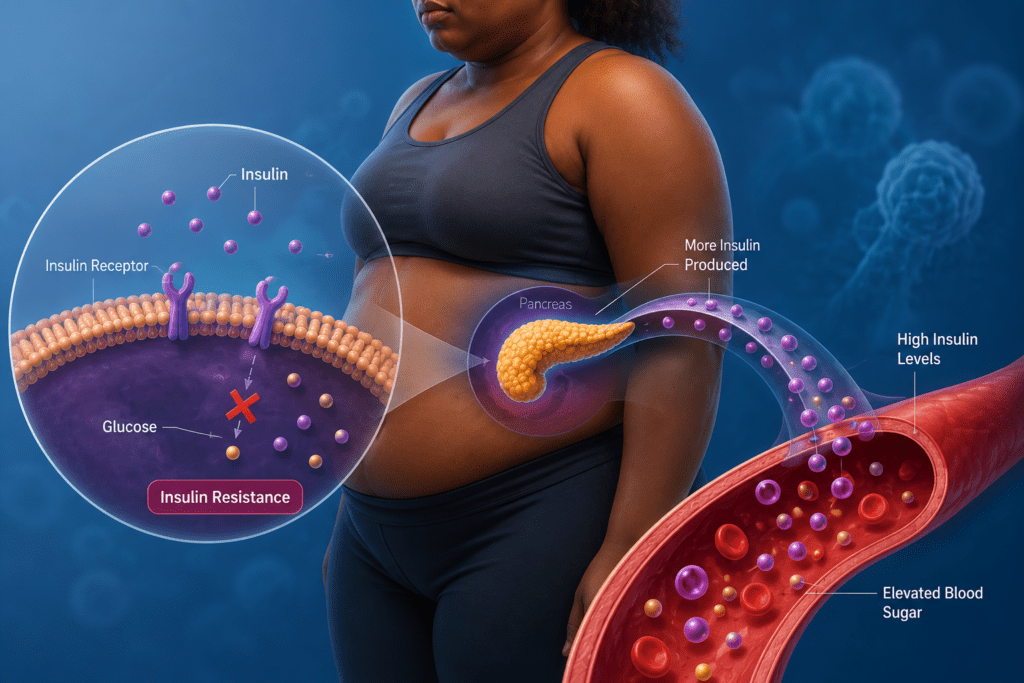
Nearly every pathway into metabolic syndrome runs through insulin resistance.
Under normal conditions, insulin acts as a messenger, helping glucose move from the bloodstream into muscle and tissue cells where it can be used for energy. When cells respond less effectively, glucose lingers in the blood, and the pancreas compensates by producing more insulin.
At first, this keeps blood sugar in check. Over time, it creates new problems.
Persistently high insulin levels encourage fat storage, particularly around the abdomen. They alter lipid metabolism, raising triglycerides and lowering protective HDL cholesterol. They also affect how the kidneys handle sodium and fluid, nudging blood pressure upward.
Dr. Gerald Reaven, who first described insulin resistance as a central driver of cardiovascular risk, emphasized that the danger lies not in one abnormal value, but in how multiple systems begin drifting together.
Modern research has only strengthened that view, showing how insulin resistance links metabolic syndrome to both heart disease and diabetes long before either is diagnosed.
As insulin resistance deepens, other changes tend to follow.
Why Abdominal Fat Changes the Risk Equation
One of the most visible consequences of insulin resistance is a shift in where the body stores fat…and this shift matters.
Visceral fat, stored deep in the abdomen around organs like the liver and pancreas, behaves differently from fat beneath the skin. It releases inflammatory molecules and free fatty acids directly into circulation, worsening insulin resistance and damaging blood vessels.
This explains a clinical reality doctors now see frequently: body weight alone is an unreliable measure of metabolic health.
Some individuals with higher body weight maintain relatively normal metabolic profiles. Others, with “normal” weight, develop metabolic syndrome early because of excess visceral fat. Waist circumference often predicts cardiovascular and diabetes risk more accurately than the scale.
Recognizing this has reshaped how clinicians assess risk…and why metabolic syndrome increasingly appears in people who never considered themselves vulnerable.
How Modern Lifestyles Quietly Drive Metabolic Syndrome
Once this biological groundwork is in place, daily habits tend to push metabolism further off balance.
Long periods of sitting reduce muscle glucose uptake. Diets high in refined carbohydrates and ultra-processed foods strain insulin regulation and lipid metabolism. Chronic stress elevates cortisol, which worsens insulin resistance and promotes abdominal fat storage. Inadequate or disrupted sleep impairs glucose control in measurable ways.
None of these factors acts in isolation. They accumulate, reinforcing one another gradually.
Metabolic syndrome reflects this accumulation. It’s not the result of a single poor choice or short period of neglect. It develops when small metabolic stresses repeat often enough, long enough, for the body’s adaptive systems to lose flexibility.
And because the process is gradual, it is often overlooked.
Why Metabolic Syndrome Rarely Causes Obvious Symptoms
One of the most challenging aspects of metabolic syndrome is how little it announces itself.
Most people don’t experience pain or sudden decline. Instead, they notice vague changes…slower recovery after exercise, mild fatigue, lab values described as “borderline.” Because these changes don’t disrupt daily life, they rarely trigger urgency.
Clinicians often describe this as a mismatch between biology and perception: the body is changing faster than the person feels.
By the time symptoms like chest discomfort, shortness of breath, or nerve pain appear, metabolic syndrome has often progressed into established cardiovascular disease or type 2 diabetes.
That progression becomes clearest where these conditions intersect.
The Overlap Between Metabolic Syndrome, Diabetes, and Heart Disease
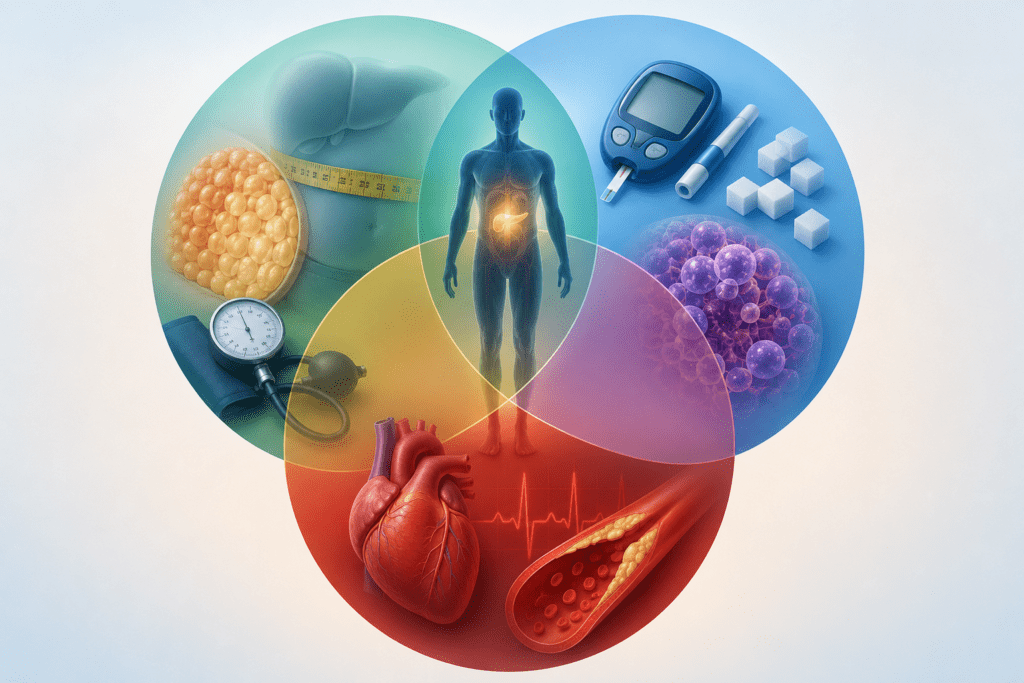
Metabolic syndrome doesn’t simply raise the risk of diabetes and heart disease…it connects their development.
As insulin resistance worsens, pancreatic beta cells struggle to maintain normal glucose levels. Blood sugar rises from normal to prediabetic ranges and eventually to type 2 diabetes.
At the same time, inflammation, abnormal lipid patterns, and endothelial dysfunction accelerate atherosclerosis.
When diabetes develops on top of metabolic syndrome, cardiovascular risk rises sharply. Studies consistently show higher rates of heart attack, stroke, and heart failure in individuals who have both conditions compared with either alone.
This overlap explains why cardiologists and endocrinologists increasingly view metabolic health as shared territory rather than separate specialties.
How Metabolic Syndrome Is Diagnosed
Because symptoms are subtle or absent, diagnosis relies on objective measurement.
Doctors evaluate fasting glucose or HbA1c, blood pressure, lipid profiles, and waist circumference. Increasingly, they also consider family history, ethnicity, and early-life risk factors that influence insulin sensitivity and cardiovascular risk.
The goal is early recognition. When metabolic syndrome is identified before diabetes or heart disease develops, the opportunity to change outcomes is far greater.
Treatment Focuses on Changing Direction, Not Perfection
Managing metabolic syndrome means addressing the underlying imbalance rather than chasing ideal numbers.
Regular physical activity improves insulin sensitivity. Dietary changes stabilize blood sugar and lipid levels. Weight reduction, when appropriate, reduces visceral fat and inflammation.
Stress management and sleep quality play larger roles than many patients expect.
Medications become important when lifestyle changes alone aren’t enough. Blood pressure agents, glucose-lowering therapies, and lipid-lowering drugs help reduce cardiovascular risk while deeper metabolic improvements take hold.
What matters most is consistency. Metabolic health responds to sustained patterns, not short-term intensity.
Can Metabolic Syndrome Be Reversed?
In many cases, yes.
Evidence shows that improving insulin sensitivity and reducing visceral fat can significantly lower the risk of both type 2 diabetes and cardiovascular disease. The earlier intervention begins, the more flexible the outcome tends to be.
Metabolic syndrome represents a window..one where long-term trajectories can still change.
Why Follow-Through Matters Beyond the Clinic
Understanding metabolic syndrome is only the beginning. Long-term outcomes depend on what happens after appointments end.
Daily behaviors like taking medications consistently, monitoring changes, staying engaged with care plans shape risk over years. This is where practical systems of support become essential.
myMedicines help people stay consistent with treatment by providing access to quality medications. For individuals managing metabolic syndrome, diabetes risk, or cardiovascular prevention, that reliability supports the everyday actions that reduce long-term risk.
If you’re navigating metabolic risk or supporting someone who is, Visit myMedicines.
myMedicines can help you keep treatment consistent, organized, and sustainable…day by day.
The Takeaway
Metabolic syndrome explains why chronic diseases so often feel sudden, even when they’re not. It reflects years of small metabolic shifts adding up quietly.
Recognizing it early shifts the focus from reacting to illness to preventing it…at a stage where intervention still works.
And for many people, that recognition arrives just in time.
