
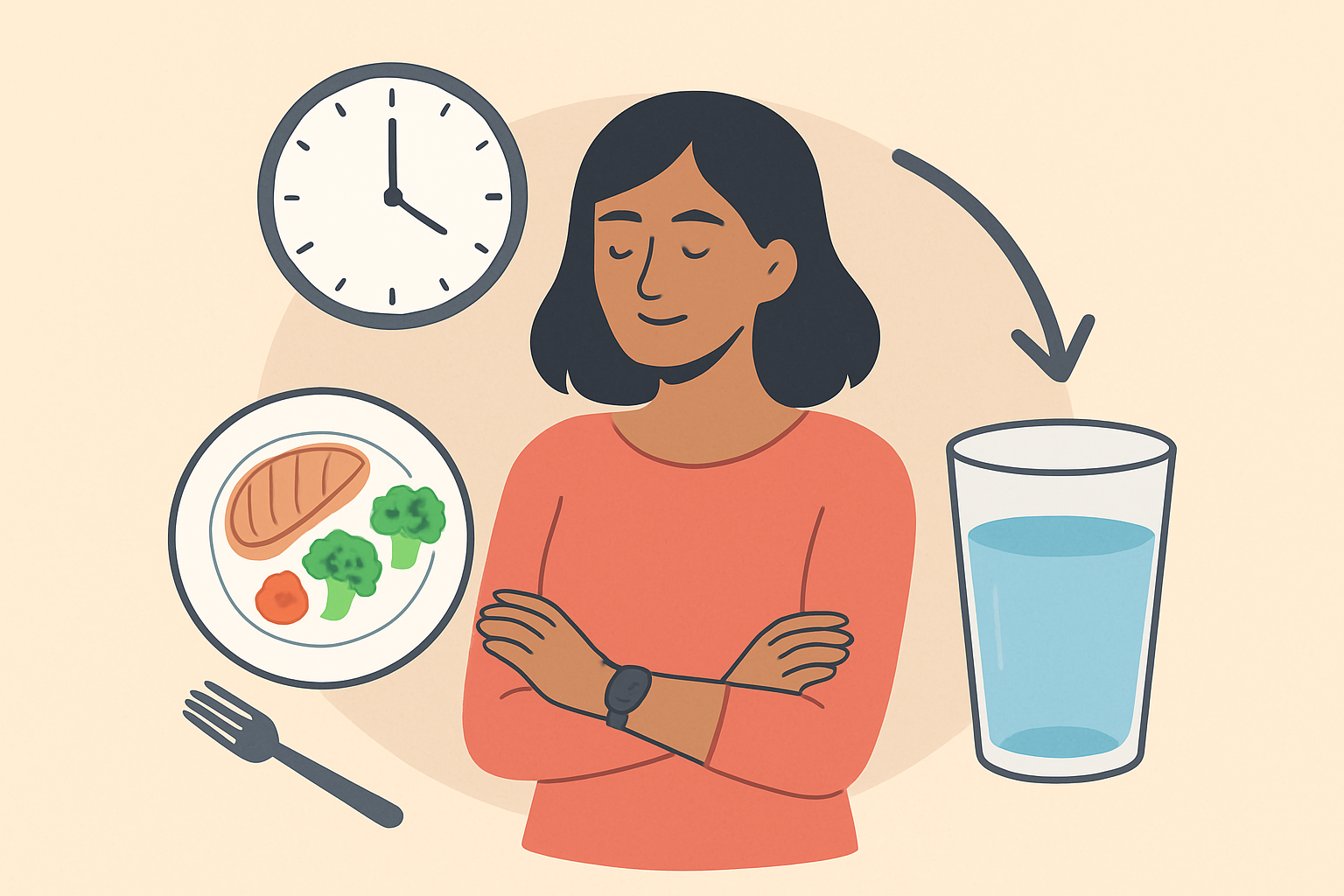
From TikTok transformations to late-night podcast debates, intermittent fasting (IF) has become the wellness topic everyone talks about.
Promises of faster weight loss, clearer skin, boosted focus, and even slow-aging make it sound almost magical. But the truth is more useful than the hype and easier to follow when someone explains it clearly.
Some people call it the “metabolic reset.” Others call it a fad. So, what’s the truth? Is intermittent fasting actually a science-backed way to burn fat and improve health or just another cleverly marketed wellness gimmick?
In this article, I’ll break down Intermittent fasting in plain terms: what it actually is, how it works, what the best science says, and who should be careful.
So let’s begin!!!! N.B : I’ll be using “IF” as an acronym of Intermittent fasting.
Intermittent fasting is about when you eat, not what you eat
Before we get into all the health claims, let’s make one thing clear: Intermittent fasting (IF) isn’t a diet in the traditional sense. You’re not banning carbs, going keto, or eating nothing but salads. Instead, you’re simply changing the timing of your meals.
Think of IF as a scheduling hack for your meals. Instead of changing your menu, you get to change the clock.
Popular approaches include:
- 16:8 (Time-Restricted Eating / TRE) — fast 16 hours, eat during an 8-hour window (e.g., 11am–7pm).
- 12:12 — beginner friendly (fast 12 hours, eat 12 hours).
- 5:2 — normal eating 5 days, very low calories 2 days.
- Alternate-day fasting / OMAD : This is a more extreme option for experienced people.
Why people love TRE: It is because of how it simplifies decision-fatigue (fewer meals to plan), often reducing daily calories without counting, and it fits busy lives. But remember: food quality still matters … fried foods and sugar in your eating window can reduce the benefits.
How fasting can change your metabolism
Think of your body as a fuel-burning machine. Normally, you run on the food you eat (mainly carbs, broken down into glucose). But when you go for several hours without eating, your insulin levels drop, and your body flips the switch from “store mode” to “burn mode.”
Before we go into the studies, here’s the short version of what fasting does inside your body:
- When you fast, insulin level drops. That helps your body shift from burning glucose to burning stored fat.
- Fasting improves metabolic flexibility … your body gets better at switching between fuel sources (carbs vs. fat)
- Autophagy kicks in — your cells start cleaning out damaged components, a process linked to reduced inflammation and healthier aging.
- Hormones like norepinephrine increase — which can slightly boost metabolism and fat breakdown.
Fasting creates a metabolic environment that can favor fat burning and cellular repair — but results depend on how you eat, move, and sleep.
It is not magic….it’s simply giving your body a consistent break from digesting so it can focus on repair, balance, and fat mobilization.
So… does intermittent fasting beat regular dieting for weight loss?
Short answer: Not dramatically … but it’s often easier to stick with.
Recent studies have shown that intermittent fasting (IF) can be just as effective as traditional calorie-restricted diets for weight loss and improving metabolic health, as long as the total calorie intake is similar.
However, the real benefit of IF lies in its simplicity and sustainability.
By restricting your eating to a specific time window, you can naturally reduce your overall calorie intake without having to meticulously count calories.
This approach can be particularly helpful for people who struggle with traditional dieting methods that require strict calorie tracking.
With IF, you can focus on developing a healthier relationship with food and your body, rather than getting bogged down in numbers and calculations.
For example, let’s say you choose to follow a 16:8 IF plan, where you eat within an 8-hour window and fast for the remaining 16 hours of the day. You might find that you’re naturally inclined to eat fewer calories overall, simply because you’re not snacking as frequently or mindlessly throughout the day.
By finding a time window that fits your lifestyle, you can make IF a sustainable and enjoyable part of your daily routine. This, in turn, can lead to a range of benefits, including weight loss, improved insulin sensitivity, and even increased longevity.
Ultimately, the key to success with IF is finding a rhythm that works for you and sticking to it consistently. With its flexibility and simplicity, IF can be a powerful tool for achieving your health and wellness goals.
That means IF is a tool, not a miracle. It helps because it reduces opportunities to snack and also emotional eating….consistency wins over complexity.
What Studies Actually Show
To keep this insightful and not too overwhelming, here are evidence highlights experts keep returning to:
- Weight & metabolic health: Systematic reviews show IF reduces body weight, BMI and some cardiometabolic risk markers, largely because people eat fewer calories overall. It tends to perform as well as standard calorie restriction when calories match.
- Circadian timing matters: Early time-restricted eating (eating earlier in the day) often gives added benefits like improved blood pressure, appetite regulation, and mood likely because it aligns with our circadian rhythm.
- Autophagy & longevity: Animal studies strongly link fasting to autophagy and longevity; in humans the mechanism is plausible and supported by markers, but direct proof that IF extends human lifespan is not settled.
IF helps, but it’s not fundamentally superior to a well-calibrated calorie-controlled diet, except that many people find IF easier to follow.
Why so many people swear by it … real-life wins that keep them hooked
When you talk to people who’ve stuck with IF, they’ll tell you about changes that go beyond the number on the scale.
Those who stick with TRE or 16:8 often report:
- Faster loss of belly bloat and steadier digestion.
- Clearer mental focus after the initial adaptation.
- Less decision fatigue around meals (fewer snacks, fewer choices).
- Better portion control without conscious counting.
Why this happens: restricting the time you eat often reduces mindless snacking, emotional eating, and late-night calorie dumps… all the things that quietly make one add up. When those habits change, results follow.
Safety, risks and who should avoid IF
IF is generally safe for many adults, but it isn’t for everyone. Don’t guess, check if you fall into any of these groups:
- Pregnant or breastfeeding — your body needs steady nutrition.
- People with current or past eating disorders — fasting may trigger relapse.
- People on glucose-lowering medications (type 2 diabetes especially) — fasting can cause dangerous hypoglycemia unless supervised. Studies urge careful clinician oversight.
- Elderly and frail individuals who are at risk of muscle loss.
- Anyone with chronic conditions should speak to a doctor before trying extended fasts.
Even if you’re healthy, expect some initial side effects: headaches, irritability, hunger pangs, or trouble sleeping in the first week or two. These usually fade as your body adapts.
How to start intermittent fasting without feeling miserable
If you want to test IF safely and get results, follow this practical roadmap:
- Start soft: 12:12 for two weeks (e.g., 7pm–7am fasting) → move to 14:10 → then 16:8 if you want.
- Pick an eating window that fits life: 10am–6pm or 11am–7pm work well with daylight and social routine.
- Prioritize protein & strength training: protect muscle — aim for ~20–30g protein per meal and resistance training 2–3x/week.
- Choose whole foods: lean protein, vegetables, fibre, healthy fats — timing isn’t an excuse to snack on junk.
- Hydrate: water, black coffee, plain tea are OK during fasting windows.
- Track results: measure body composition, energy levels, sleep and mood — not just the scale.
- If you’re diabetic or on meds, consult your clinician first. Adjustments may be required.
These steps help you gain IF’s benefits while minimizing common downsides like muscle loss and mood dips.
What to believe and what to ignore
Believe:
- IF can be a simple, sustainable way to reduce calories and improve metabolic markers. Harvard Chan School of Public Health
- Early TRE that respects circadian rhythm may add extra benefits. PMC
Ignore:
- Claims that IF is a guaranteed “fountain of youth” for humans — longevity evidence is promising but not conclusive. PMC
- Clickbait that implies you can eat anything in your window and still be healthy. Food quality still matters.
Health isn’t just about discipline, it’s also about access
Making healthy choices often costs money. You need better protein sources, fresh produce, and essential medications.
All these can cause a strain on your budgets. That’s why healthtech innovations that remove financial barriers matter.
Advantage Health Africa recently launched a zero-interest Buy-Now-Pay-Later (BNPL) medication product that lets eligible Nigerians order essential medicines up to ₦50,000 and repay within 30 days.
That means people who start a new health routine like a doctor-supervised weight-loss plan or treatment for a metabolic condition can access medications and follow-up care immediately, without delaying because of cashflow.
Read more here: Advantagehealthafrica.com
Why this matters for IF and health:
- If a clinician prescribes medication (e.g., for blood sugar or high blood pressure) while you begin time-restricted eating, BNPL reduces the risk of skipping or delaying the meds because of cost.
- Access to medications and telemedicine support can make IF safer for people with chronic conditions who must be monitored. Advantage health’s ecosystem also links to telemedicine and medicine delivery, smoothing care continuity.
If you plan to try IF and you’re managing an ongoing condition, talk to your clinician and if costs are a concern, check whether Advantage Health Africa’s BNPL or myAdvantage Insurance plan option.
The bottom line — is intermittent fasting worth it?
Yes — if you want a simple, low-tech tool that may help with weight control, energy and metabolic health, and if you don’t fall into high-risk groups. Start gently, prioritize protein and whole foods, align meals with daylight when possible, and get medical advice if you take medication or have chronic illness.
And remember: IF is a behavior tool, not a magic pill. Consistent food quality, strength training, sleep, and stress management still drive long-term results.
If cost or access to meds and care is a barrier, explore validated BNPL options like Advantage Health Africa’s program so you can follow recommended medical plans without breaking the bank.
The beauty is in the simplicity. IF gives you a clear framework without forcing you to obsess over every bite.