

“Acid reflux and bile reflux may share a similar sting, but their causes are different”.
If you’ve ever felt a burning sensation in your chest or a sour taste rising in your throat after eating, you’ve likely experienced acid reflux.
Here’s the twist ….that discomfort might not be caused by acid alone. It could also involve bile reflux, a lesser-known yet equally irritating condition.
Understanding acid vs bile reflux is important because while both cause similar symptoms, their roots and how you manage them can be quite different.
In this article, you’ll learn exactly what sets acid and bile reflux apart, how trapped gas makes the symptoms worse, and how the anti-flatulent component in RelsidPlus helps relieve pressure, bloating, and pain.
This takes you beyond definitions …into the why and how behind the symptoms, with clear explanations and practical tips, By the end, you’ll know what’s really happening inside your digestive system and how to take smarter steps toward relief.
What Is Acid Reflux?
Let’s start with the familiar term. Acid reflux happens when the stomach acid moves backward into the esophagus, ie the tube connecting your mouth to your stomach. This backward flow occurs when the lower esophageal sphincter (LES), a ring-like valve at the end of the esophagus, doesn’t close properly.
When that valve relaxes at the wrong time, acid splashes upward. And the result is a burning feeling in the chest, known as heartburn, often after large meals or when lying down.
Over time, frequent reflux episodes can develop into GERD (Gastroesophageal Reflux Disease)…. a more chronic and potentially damaging form.
In GERD, acid exposure can inflame the esophagus, leading to ulcers, persistent cough, throat irritation, and even precancerous changes like Barrett’s esophagus.
Common Symptoms of Acid Reflux
- Burning sensation in the chest or throat
- Bitter or sour taste in the mouth
- Regurgitation of food or liquid
- Bloating and frequent burping
- Sore throat or chronic cough
- Difficulty swallowing
The important takeaway here is that…Acid reflux isn’t just about acid, it’s about pressure, valve function, and digestion timing. And as we’ll soon learn, these same mechanical issues play a big role in bile reflux too.
What Is Bile Reflux?
Now let’s discuss bile reflux, the often-overlooked twin of acid reflux. Bile is a digestive fluid made in the liver and stored in the gallbladder. Its job is to help break down fats in the small intestine.
However, when the pylorus valve (the gateway between your stomach and small intestine) fails to close properly, bile can flow backward from the small intestine into the stomach, and sometimes even into the esophagus.
This backflow irritates the delicate stomach and esophageal lining. Unlike acid reflux, bile reflux isn’t acidic; it’s alkaline. Yet, bile salts and digestive enzymes can still cause burning, inflammation, and deep discomfort.
Symptoms of Bile Reflux
Because bile reflux often appears alongside acid reflux, the two can easily be confused together. But certain symptoms stand out:
- Upper abdominal pain after meals
- Frequent nausea or vomiting
- A bitter, yellow-green fluid (bile) in vomit
- Persistent cough or sore throat
- Feeling of fullness, even after small meals
If you’ve had gallbladder surgery or stomach surgery, your risk of bile reflux increases because those procedures can alter the natural direction of digestive flow.
Acid vs Bile Reflux: Key Differences and Overlap
Although acid reflux and bile reflux share many symptoms, their origins differ. Yet in real life, they often appear together creating a mixed reflux condition that feels twice as bad.
Here’s a clear side-by-side comparison:
| Feature | Acid Reflux | Bile Reflux |
|---|---|---|
| Fluid involved | Stomach acid (Hydrochloric acid) | Bile and digestive enzymes from the small intestine |
| pH environment | Acidic | Neutral to alkaline |
| Common triggers | Spicy, fatty foods, caffeine, alcohol, overeating, obesity | Gallbladder removal, gastric surgery, pyloric valve malfunction |
| Response to acid suppression | Usually improves with antacids or PPIs | May not improve with acid blockers alone |
| Potential complications | Esophagitis, Barrett’s esophagus, strictures | Gastritis, esophageal inflammation, ulcers (worse when acid and bile mix) |
As you can see, acid vs bile reflux isn’t about choosing one or the other…..it’s about understanding how they interact. Both can irritate the esophagus, but bile reflux often causes deeper, more persistent discomfort, especially when acid-suppressing medications don’t seem to help.
How Trapped Gas Worsens Reflux Symptoms
Now that we understand the core difference, let’s explore one hidden trigger that can make both types of reflux worse: trapped gas.
It might surprise you, but something as simple as swallowed air or digestive gas can amplify reflux symptoms…. even when your acid levels are under control.
Why Gas Builds Up
Gas forms naturally in your digestive system in two main ways:
- Swallowed air (aerophagia): Every time you eat, talk while chewing, drink carbonated beverages, or chew gum, you swallow small amounts of air.
- Digestive fermentation: Bacteria in your intestines produce gas when breaking down undigested carbohydrates, fiber, or lactose.
Normally, your body expels gas through belching or passing flatus. But when that gas gets trapped especially in the upper stomach, it builds up pressure.
The Chain Reaction: How Gas Triggers Reflux
That trapped gas does more than cause bloating. It physically pushes your stomach contents upward. Here’s what happens step by step:
- The trapped air increases stomach pressure, forcing acid or bile upward.
- The LES (lower esophageal sphincter), already sensitive, opens reflexively under pressure.
- As the pressure rises, reflux episodes become more frequent and intense.
- The distention of the stomach wall adds discomfort, making every reflux event feel stronger.
- Gas bubbles can even carry refluxate (acid or bile) higher up the esophagus, worsening the burning sensation.
So when people say their reflux feels worse after a heavy meal, it’s often not just the food…..it’s the trapped gas amplifying the pressure inside.
The Science Behind Anti-Flatulents
This is where anti-flatulent agents like simethicone come into play. They don’t reduce acid or bile, but they tackle the pressure problem caused by trapped gas.
How Simethicone Works
Simethicone is a silicone-based compound that acts physically, not chemically. Here’s how:
- It reduces the surface tension of gas bubbles in your stomach and intestines.
- Small bubbles merge into larger ones, which your body can easily expel through belching or flatulence.
- It works locally…. meaning it isn’t absorbed into your bloodstream, so it’s safe and gentle.
Think of simethicone as a “gas deflater”… it helps your body get rid of gas more efficiently, relieving bloating and reducing the internal pressure that worsens reflux.
Why It Matters for Reflux
By minimizing trapped gas, simethicone directly addresses the mechanical stress that triggers reflux. Less pressure means:
- Less backflow of acid or bile
- Fewer episodes of heartburn or regurgitation
- Less bloating and abdominal discomfort
- Better response to acid-suppressing medications
For people dealing with acid vs bile reflux, this gas-relief approach can make a noticeable difference in comfort.
Managing Reflux Holistically: Beyond Acid Control
A complete reflux management plan should tackle all contributing factors not just acid. Whether it’s acid reflux, bile reflux, or a mix of both, your strategy should include:
- Neutralizing acid with antacids or acid-suppressing drugs
- Reducing bile irritation through bile acid binders or prokinetics
- Improving motility to speed up gastric emptying
- Relieving trapped gas with anti-flatulent agents
- Adjusting lifestyle habits to prevent triggers
When you combine these steps, you get comprehensive relief addressing not just symptoms but the underlying pressure and flow problems that cause reflux in the first place.
Triple Relief for Reflux and Gas-Related Discomfort
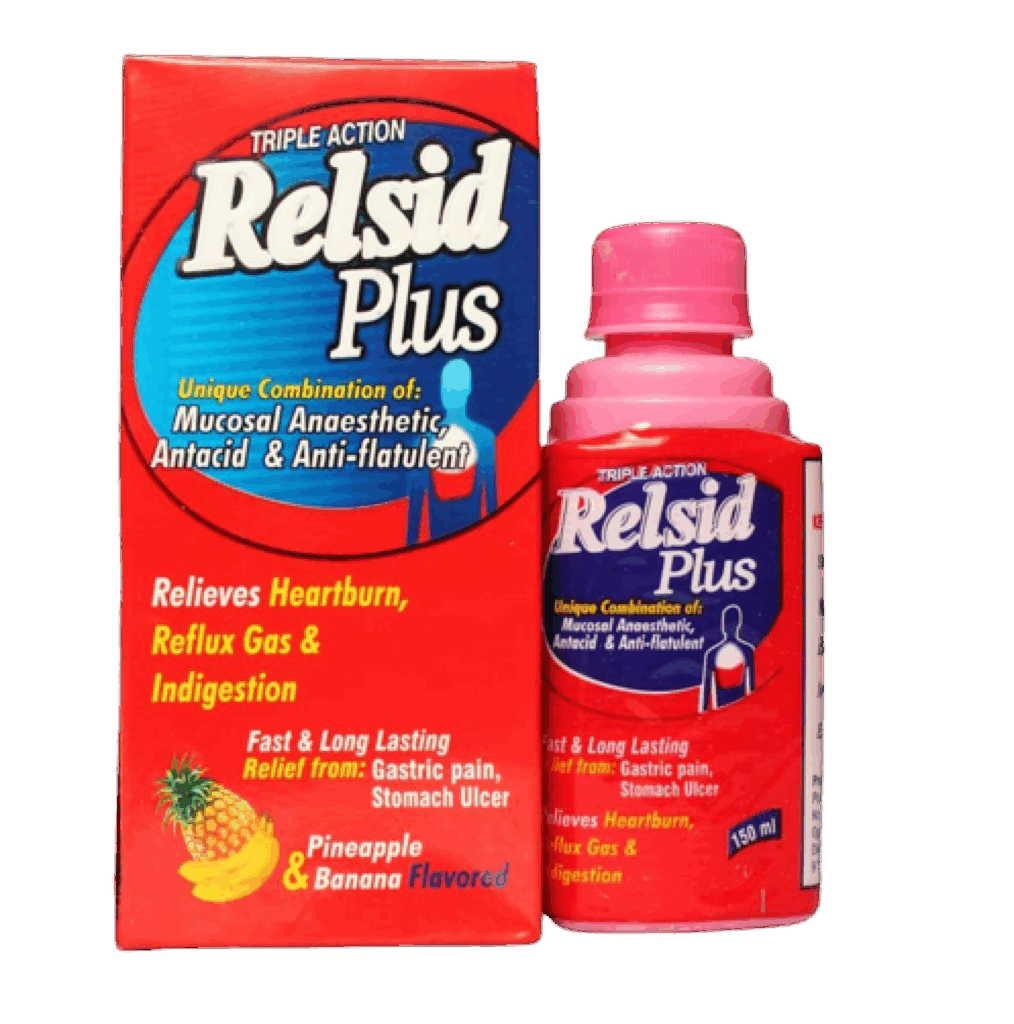
Here’s why Relsidplus is important and how it stands out.
Relsidplus is an advanced antacid formulation designed to relieve symptoms of acid reflux, bile reflux, indigestion, heartburn, and gas-related discomfort. Its unique strength lies in its triple-action combination:
- Magaldrate – neutralizes excess stomach acid.
- Simethicone – the anti-flatulent that breaks down trapped gas bubbles.
- Oxethazaine – a local anesthetic that soothes pain and irritation.
How Relsid’s Anti-Flatulent Component Enhances Relief
When reflux symptoms are intensified by gas, Relsid plus’ simethicone component steps in to provide fast and targeted relief.
Here’s how it helps:
- Reduces pressure inside the stomach, preventing upward reflux.
- Makes trapped gas easier to expel, easing bloating and fullness.
- Enhances the comfort provided by the antacid, since less pressure means longer-lasting relief.
- Soothes irritation, thanks to oxethazaine’s numbing effect.
The result is a more complete approach: while the antacid calms the acid, the anti-flatulent removes the physical cause of pressure, and the anesthetic eases the pain.
It doesn’t just mask symptoms… it helps your digestive system reset to a calmer, more balanced state.
Best Practices for Managing Acid and Bile Reflux
To get the best out of any reflux treatment (including Relsidplus), pair it with lifestyle adjustments that support digestive balance:
- Eat smaller meals and chew slowly.
- Avoid eating right before bedtime.
- Limit trigger foods like caffeine, chocolate, fried meals, and alcohol.
- Stay upright after eating for at least 2–3 hours.
- Wear loose-fitting clothes to avoid compressing the stomach.
- Keep your head elevated while sleeping.
- Stay hydrated and manage stress….both affect digestion more than most people realize.
These simple habits, when combined with a reflux treatment like Relsid, make a big difference in symptom control and long-term gut comfort.
Conclusion
In the ongoing discussion of acid vs bile reflux, one truth stands out: both conditions share a common aggravato, which is trapped gas. That gas creates pressure, weakens the protective valves, and fuels the backflow that leads to burning and pain.
By combining acid neutralization, gas relief, and pain soothing, Relsidplus delivers comprehensive comfort, addressing not just the symptom, but the cause of pressure that makes reflux worse.
Whether your discomfort stems from acid, bile, or a mix of both, managing trapped gas is a crucial step toward lasting relief. With balanced digestion and the right medication from myMedicines, your digestive system can finally breathe easier.
FAQs on Acid vs Bile Reflux and Gas Relief
Yes, and it’s actually quite common. When the stomach’s valves malfunction, both acid and bile can flow backward. This mixed reflux often causes more persistent discomfort
Absolutely. Gas increases stomach pressure, forcing acid or bile upward. Relieving that gas pressure can reduce reflux frequency and intensity.
Simethicone helps merge small gas bubbles into larger ones, making them easier to expel. By lowering stomach pressure, it reduces the force behind reflux.
Not always. While acid reflux often responds well to acid-suppressing drugs, bile reflux may require different approaches, such as bile acid binders or medications that improve gastric motility.
Relsid is safe for short-term relief, but if symptoms persist, it’s best to consult a doctor to rule out underlying issues like ulcers or valve dysfunction.
