

If you live in Nigeria, heat is something you think you understand.
You’ve lived through countless hot afternoons, complained about NEPA taking light when the fan suddenly stops working. You’ve joked about Lagos sun “trying to finish everybody.”
But lately, something feels different.
The heat isn’t just uncomfortable anymore.
It’s dangerous!!
Across Nigeria, temperatures are rising to levels that doctors and climate experts now classify as heat waves, ie prolonged periods of extreme heat that can seriously threaten human health.
And the scary part is that many Nigerians don’t recognize when a heat wave is happening until people start collapsing from heat exhaustion or heat stroke.
When a Normal Hot Day Turns Dangerous
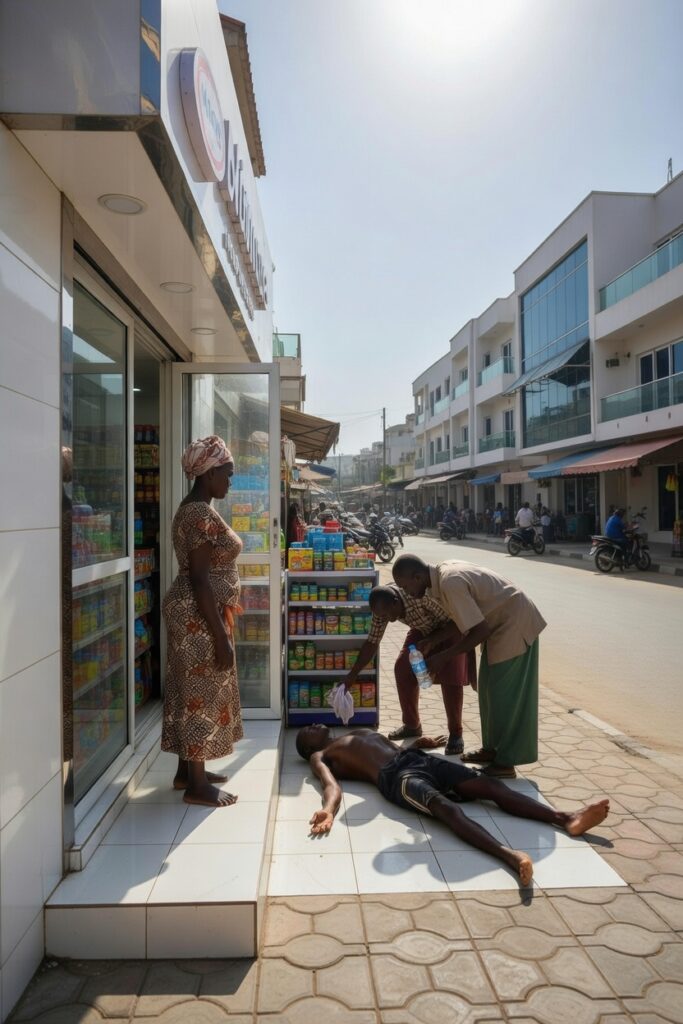
That realization hit Mercy one afternoon in Surulere.
By 2 PM, the scorching heat outside her shop was unbearable with the sun beating down relentlessly. The air felt thick and suffocating.
Three customers had already complained of dizziness that day.
Then an elderly man suddenly collapsed right there on the floor.
His skin was hot, dry and his breathing was shallow.
At first, people assumed it was just dehydration.
But Mercy knew something was wrong.
This wasn’t just another hot day in Lagos.
It was a heat wave.
Situations like this are becoming more common across Nigeria.
According to climate scientists, extreme heat events in West Africa have increased dramatically in the past four decades, and Nigeria is now experiencing longer, hotter, and more frequent heat waves than ever before.
The problem is that many Nigerians still treat extreme heat like a minor inconvenience.
Heat waves are actually one of the deadliest weather events in the world, killing more people globally each year than floods, hurricanes, or earthquakes.
Understanding what heat waves are, why they’re becoming more common in Nigeria, and how to survive them could literally save lives.
So…let’s break it down...
What Is a Heat Wave?
Now here’s where many people misunderstand the situation.
Most Nigerians think a heat wave simply means “very hot weather.”
But scientifically, a heat wave is much more serious than that.
A heat wave occurs when temperatures rise significantly above the average for a region and remain high for several consecutive days.
In Nigeria, the Nigerian metrological Agency (NiMet) considers extreme heat conditions when temperatures rise above 35°C for multiple days, particularly when nighttime temperatures stay high.
That last part is critical. Because your body recovers from daytime heat at night.
But when nights stay warm, sometimes above 28°C in cities like Lagos or Abuja, your body never gets the chance to cool down properly.
And that’s when heat becomes dangerous. Temperature alone doesn’t tell the full story…Humidity plays a major role too.
Cities in southern Nigeria often experience humidity levels above 80%. When humidity is that high, sweat cannot evaporate effectively.
And evaporation is the body’s natural cooling system.
So instead of cooling you down, sweat just sits on your skin.
Your body keeps overheating. And slowly, the risk of heat exhaustion or heat stroke increases.
That’s why during some heat waves in Nigeria, the “feels-like” temperature can climb to 45°C or even higher.
At that level, even healthy adults can start experiencing symptoms of heat illness.
Now that we understand what a heat wave really is, the next question becomes even more important:Why are heat waves happening more often in Nigeria?
Why Heat Waves in Nigeria Are Becoming More Frequent

If the heat feels worse than it used to years ago, you’re not imagining it. Nigeria is warming.
Climate data shows that the country’s average temperature has increased by more than 1.2°C since the 1960s.
In climate science, that increase is huge. And it’s contributing to the rise in extreme heat events and heat waves across West Africa.
Several factors are driving this change. And they include,
Climate Change
Global climate change is pushing temperatures higher worldwide.
According to projections from climate scientists, West Africa could experience up to four times more extreme heat days by 2050.
This means heat waves that once happened occasionally may soon become a regular seasonal occurrence.
Urban Heat Islands
Large cities trap heat.
Buildings, asphalt roads, and concrete surfaces absorb heat during the day and release it slowly at night.
This phenomenon is called the urban heat island effect. In cities like Lagos and Abuja, urban temperatures can be 3–7°C hotter than nearby rural areas.
That means city residents often face longer and more intense heat exposure.
Loss of Trees and Green Spaces
Trees naturally cool the environment.
They provide shade and release moisture through a process called transpiration, which helps reduce surrounding temperatures.
Unfortunately, Nigeria loses about 350,000 hectares of forest every year, according to environmental reports.
As trees disappear, natural cooling disappears too.
Electricity Challenges
In many countries, people escape heat waves by staying in air-conditioned buildings.
In Nigeria, unreliable electricity means many people have no way to cool their homes during extreme heat.
When fans stop working and refrigerators stop cooling water, the risk of heat-related illness increases significantly.
Understanding why heat waves are increasing is only part of the story. To truly protect yourself and your family, you also need to understand what extreme heat actually does to the human body.
Heat Wave Symptoms: What Extreme Heat Does to Your Body
Extreme heat does more than make you sweat.
It puts enormous stress on the human body.
Your body works constantly to maintain a stable internal temperature of about 37°C.
When external temperatures rise too high, your body struggles to maintain that balance. And when that happens, several heat-related illnesses can develop.
Heat Exhaustion Symptoms
Heat exhaustion is often the first stage of heat-related illness.
Common symptoms include:
- extreme fatigue
- dizziness
- heavy sweating
- nausea
- headaches
- muscle cramps
- rapid heartbeat
- weakness
At this stage, the body is still trying to cool itself.
But without rest and hydration, heat exhaustion can quickly worsen.
Heat Stroke Symptoms
Heat stroke is the most severe and dangerous form of heat illness.
It occurs when the body’s cooling system completely fails.
Body temperature can rise above 40°C, and sweating may stop entirely.
Symptoms may include:
- hot, dry skin
- confusion or disorientation
- seizures
- fainting
- unconsciousness
Heat stroke is a life-threatening medical emergency.
Without immediate treatment, it can cause brain damage, organ failure, and death.
Globally, heat waves are responsible for hundreds of thousands of deaths each year, making them one of the most dangerous climate-related hazards.
Of course, while heat waves affect everyone, some people are far more vulnerable than others.
Who Is Most At Risk During Heat Waves in Nigeria
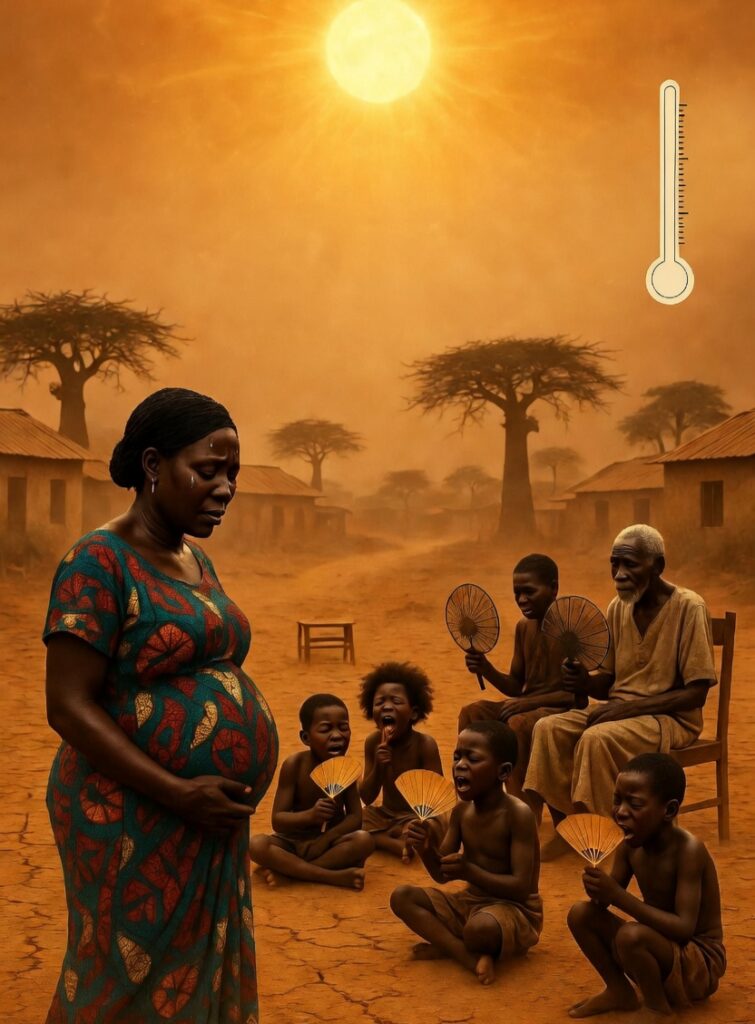
Although heat waves affect everyone, some groups face much higher risks.
These include:
- elderly adults
- infants and young children
- pregnant women
- people with chronic illnesses
- outdoor workers
Conditions like diabetes, heart disease, kidney disease, and asthma can become much more dangerous during extreme heat.
Outdoor workers such as farmers, street vendors, traffic officers, and construction workers face the greatest exposure because they spend long hours under the sun.
In many Nigerian cities, these workers spend 8 to 10 hours outdoors daily, which significantly increases their risk of heat-related illness.
The good news, however, is that most heat-related illnesses can be prevented with simple but effective precautions.
How to Survive a Heat Wave in Nigeria
Fortunately, many heat-related illnesses are preventable.
With the following precautions, you can significantly reduce your risk:
Stay Hydrated
Hydration is the most important defense against heat illness.
Experts recommend drinking at least 2–3 liters of water daily, and even more during extremely hot days.
If you are sweating heavily, oral rehydration salts (ORS) can help replace lost electrolytes.
Avoid the Hottest Hours
The sun is strongest between 12 PM and 3 PM.
If possible, schedule outdoor activities early in the morning or later in the evening.
Wear Heat-Friendly Clothing
Loose, lightweight clothing made from breathable fabrics like cotton allows air to circulate and helps sweat evaporate.
Light-colored clothing also reflects sunlight and reduces heat absorption.
Cool Your Body Frequently
Simple cooling methods can help regulate body temperature.
These include:
- taking cool showers
- using wet towels on the neck or wrists
- sitting near airflow
- resting in shaded areas
Eat Light Meals
Heavy meals generate heat during digestion.
During heat waves, lighter meals and fruits with high water content such as watermelon, oranges, and cucumbers are better choices.
In addition to hydration and cooling strategies, having access to essential health products during extreme heat can also make a significant difference.
Accessing Essential Medications and Hydration During Extreme Heat
Another important part of staying safe during a heat wave is making sure you have quick access to essential health products.
Extreme heat can worsen existing health conditions and increase the need for hydration solutions, medications, and basic medical supplies.
Platforms like myMedicines help people get access to essential medications and hydration products more easily when they need them most.
As temperatures continue to rise across the country, awareness and preparation will become even more important.
Heat Waves Are Becoming Nigeria’s Growing Health Challenge
Heat waves are no longer rare events.
They are becoming a growing public health challenge in Nigeria.
But awareness can make a huge difference.
When people understand heat wave symptoms, prevention strategies, and when to seek medical help, many heat-related illnesses can be avoided.
Mercy learned that lesson the day someone collapsed inside her shop.
Since then, she has made hydration salts readily available and educates customers about heat-related illnesses whenever temperatures rise.
Because sometimes surviving extreme heat starts with something simple:
Knowing the warning signs.
Knowing how to respond.
And knowing where to get the health support you need when temperatures rise.