

Red Meat Cancer Risk……What You Need to Know Before Your Next Bite of Suya!!
As conversations around cancer prevention grow louder, one dietary question keeps popping up: Is red meat increasing your cancer risk?
If you’re someone who loves suya, grilled steak, or peppered goat meat, this question probably matters to you now more than ever.
Red meat has long been a staple in many diets around the world….including here in Nigeria. But with rising concerns about its health impact, particularly its potential link to cancer, it’s time to take a closer look at what science and experts are actually saying.
In this article, we’ll explore the science, spotlight what health experts are saying, and explore how your love for red meat could be shaping your future health….especially when consumed regularly, carelessly, or in large quantities.
What Exactly Is Considered Red Meat?
Before we get into the health risks, it’s important to clarify what we mean by red meat.
Red meat refers to the meat of mammals that appears red when raw. This includes beef, goat, lamb, mutton, pork, and veal. In Nigerian homes and eateries, this often shows up as local favorites like suya, asun, nkwobi, peppered goat meat, ofada sauce, and gizzard, especially when made from beef or goat meat.
Then there’s processed red meat…the kind that’s been salted, smoked, cured, fermented, or otherwise preserved. Examples include sausages, bacon, ham, hot dogs, corned beef, beef jerky, and even some types of canned meats.
Both unprocessed and processed red meats have been at the center of the cancer debate, but not all meats are equal, and neither is the risk they carry.
Does Red Meat Cause Cancer? Here’s What the Research Shows
This is the million-naira question and while it’s not a straight yes or no, the science does point to strong associations.
A landmark 2021 systemic review and meta-analysis published in the European Journal of Epidemiology examined data from over 3.5 million participants across 34 prospective studies. The researchers, including Farvid et al., concluded that high consumption of red and processed meat was linked to increased cancer risk, particularly:
- Colorectal cancer
- Breast cancer
- Prostate cancer
Let’s break it down:
- Consuming just 50g of processed meat daily (about one sausage or a few strips of bacon) was associated with an 18% higher risk of colorectal cancer.
- High intake of unprocessed red meat was linked to a 12% increased risk of breast cancer.
- Prostate cancer risks also rose among men who frequently consumed both types of meat,especially if they had existing risk factors like obesity or a family history.
Another large study—the EPIC study (European Prospective Investigation into Cancer and Nutrition) also found that individuals who ate the most red and processed meat had a 20–30% higher risk of bowel cancer compared to those who ate the least.
While correlation does not confirm causation, the evidence is strong enough that the International Agency for Research on Cancer (IARC) has classified:
- Processed meats as Group 1 carcinogens (known to cause cancer in humans)
- Unprocessed red meats as Group 2A carcinogens (probably carcinogenic)
In short, there is a well-documented link between high red meat consumption and cancer, especially when it comes to colorectal and digestive tract cancers.
But Why Does Red Meat Increase Cancer Risk?
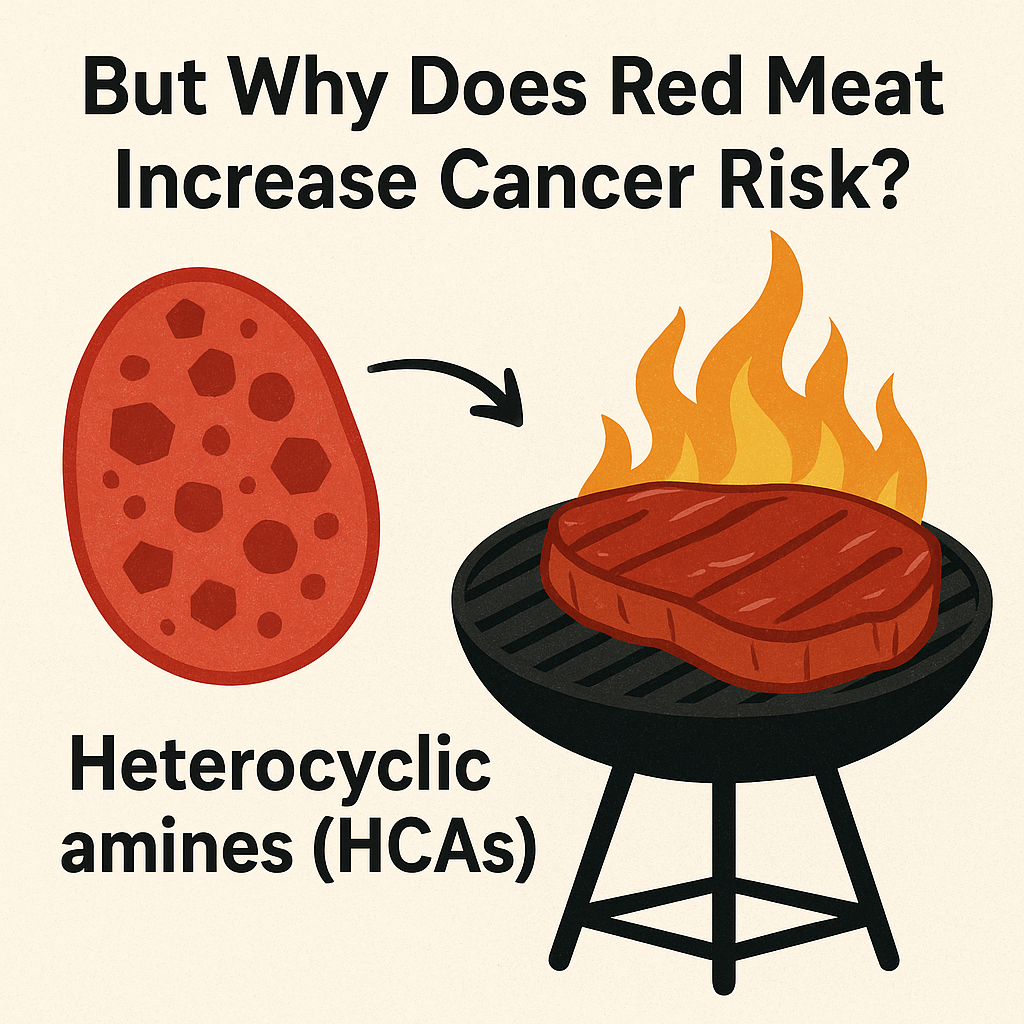
The real issue isn’t just the meat itself, it’s what happens during cooking and digestion.
When red meat is cooked at high temperatures as is common with grilling, roasting, frying, or barbecuing (hello suya!), it produces carcinogenic chemicals like:
These compounds form when muscle meat reacts with high heat, especially over open flames or smoking wood. Both HCAs and PAHs can damage DNA, which may lead to mutations and, eventually, cancer.
Another red flag? Heme iron, the type of iron abundant in red meat, can contribute to the formation of N-nitroso compounds during digestion. These compounds are also known carcinogens.
Moreover, processed meats often contain added nitrates and nitrites, preservatives that help keep meat red and extend shelf life. However, when these additives interact with amino acids in the body, they can form nitrosamines, another class of potential cancer-causing chemicals.
As Dr. Marian Neuhouser, nutritional epidemiologist at the Fred Hutchinson Cancer Center, explains:
“It’s not just about how much red meat you eat, but how you cook it.”
The traditional Nigerian suya or peppered meat grilled on open flames may expose people to higher levels of carcinogens if consumed excessively.
Are All Red Meats Bad for You?
Absolutely not…..
Red meat is a rich source of essential nutrients that are vital for the body, including:
- High-quality protein for muscle growth and repair
- Vitamin B12, which supports nerve function and red blood cell formation
- Heme iron, a form of iron that is easily absorbed
- Zinc, which helps boost immune function
- Creatine and carnosine, important for brain and muscle performance
The nutritional value of red meat is undeniable, especially in populations vulnerable to anemia, malnutrition, or protein deficiency. In many African diets, red meat serves as one of the few accessible sources of these nutrients.
But again, the problem lies in quantity, frequency, and cooking methods.
Eating red meat once or twice a week, cooked at moderate temperatures, and paired with fiber-rich vegetables is far less risky than consuming heavily grilled or processed meats multiple times a week.
As Dr. Dariush Mozaffarian, cardiologist and professor at Tufts University, puts it:
“Any protein source will meet one’s protein needs—it’s what comes with the protein that matters.”
In other words, the extras….like saturated fat, salt, preservatives, or charred edges are where the danger lies, not necessarily in the meat itself.
How Much Red Meat Is Too Much?
To stay on the safe side, international health bodies recommend clear limits.
The World Cancer Research Fund (WCRF) and the American Institute for Cancer Research (AICR) suggest:
- Eating no more than 350–500g of cooked red meat per week
(That’s about 3–4 moderate servings) - Avoiding processed meat altogether as much as possible
To give you context:
- A stick of suya or a bowl of nkwobi can contain 80–100g of red meat.
- A plate of pepper soup with goat meat might offer 150g depending on serving size.
- A standard beef burger contains roughly 120g of meat.
If you’re eating 3–4 servings of suya or peppered meat per week, you’re likely overshooting the safe zone.
Who Should Be More Cautious With Red Meat?
While everyone should aim for moderation, certain people may need to be even more careful, including:
- Men over 50, who face higher prostate and colon cancer risks
- Postmenopausal women, due to increased breast and colorectal cancer risk
- People with a family history of cancer
- Those living with inflammatory bowel disease (IBD) or ulcerative colitis
- Individuals with obesity, diabetes, or metabolic syndrome
In these cases, reducing red meat intake or switching to plant-based protein options like beans, lentils, or tofu may significantly reduce lifetime cancer risk.
Remember, your overall lifestyle including physical activity, smoking, alcohol use, and fiber intake can increase or reduce how red meat affects your health
What Do Health Experts Recommend?
The overwhelming expert consensus is not to fear red meat, but to respect it. Eat it in moderation, prepare it smartly, and balance it within a healthy diet.
Dr. Mozaffarian encourages people to look at their whole plate, not just the meat on it:
“Rather than cutting out red meat entirely, consider incorporating more plant-based proteins like beans, lentils, and nuts. When you do eat red meat, go for lean, unprocessed cuts.”
Other experts emphasize:
- Portion control
- Low-temperature cooking methods like steaming or baking
- Avoiding over-charring or blackening meat
- Pairing red meat with vegetables, legumes, and whole grains to reduce inflammation and support gut health
So, Should You Stop Eating Suya?
Not necessarily, but you may want to rethink how often and how much you enjoy it.
Here’s how to keep suya and your health on good terms:
- Cut down frequency: Try having suya once a week, not three times.
- Watch your portions: One or two sticks per serving is safer than five or more.
- Choose lean cuts: Trim visible fat; go for sirloin or tenderloin.
- Avoid burning or charring: Blackened bits = higher carcinogen content.
- Add fiber: Pair with cabbage, cucumbers, or whole grains to support digestion.
- Switch things up: Occasionally replace meat with grilled mushrooms, tofu, or spicy grilled fish.
This way, you still get to enjoy your favorite food without paying a long-term health price.
Should You Worry About Red Meat and Cancer?
No need to panic, but you do need to stay informed.
The science is clear: frequent, high consumption of red and processed meats increases your risk of several cancers, especially colorectal cancer.
But with smart choices, moderation, and a balanced diet, you can continue enjoying red meat without gambling with your health.
Ultimately, it’s not about banning red meat…..it’s about being intentional with your plate.
Your Health Matters—But So Does Access to Care
Managing cancer risk doesn’t stop at food choices. Early detection, access to diagnostics, and the ability to get essential medications also play a huge role in long-term health.
That’s why Advantage Health Africa now offers a Buy Now, Pay Later service that helps you get the medications you need, when you need them, without breaking the bank.
Whether you’re undergoing treatment or just managing everyday conditions, you deserve access to quality care without delay. Learn more about how this service can support your health journey at www.advantagehealthafrica.com.
Key Takeaway:
Red meat isn’t the enemy, but how much you eat, how it’s cooked, and what else you eat with it makes a big difference. Love suya? No problem….just love it responsibly.
